
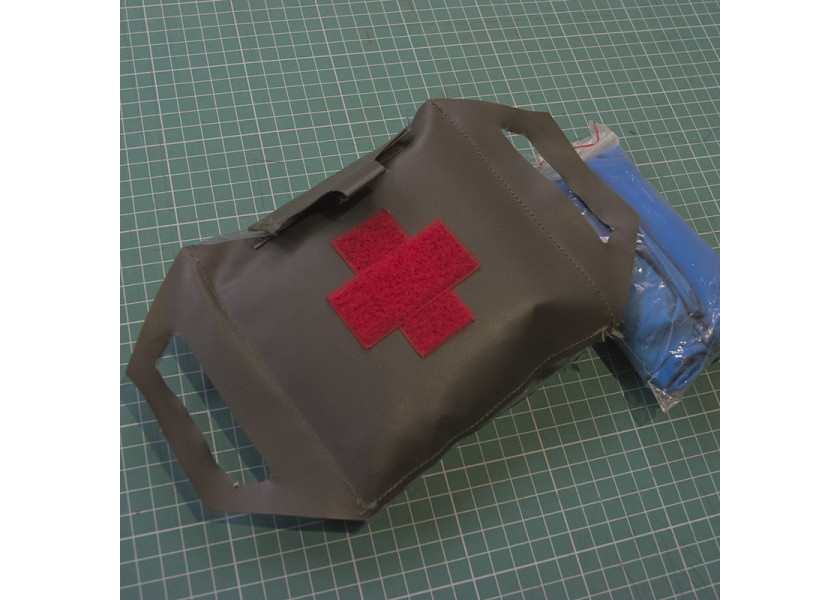
Tourist-related first aid kit, i.e. slightly but effectively
The dilemma of what to take with you from rescue equipment to the mountains, the forest or skiing has always existed. Whether to take a field hospital or the minimum, i.e. a safety pin and cyanoacrylate glue, and trust that nothing will happen. There are always two factions: ultarlight and Full Mega Total Medic Staff and Solutions, i.e. I have everything and I'm ready for anything, but I can't do anything anymore because I'm tired of wearing it. The solution to this situation lies between these extremes. Ultralighters do not carry unnecessary medical trash, because nothing will happen anyway, and the second wing is prepared to save many people's lives in the compilation of disasters in sea, air and land traffic, but if it comes to sticking a plaster on the leg, it turns out that there is no piece a slice for 50 cents.
When completing a mountain or forest first aid kit, you should answer the question - what injuries will I be exposed to during our trip. First, let's take care of our safety with 2 pairs of rescue gloves. Gloves will come in handy when we have to help our travel companions or bystanders on the trail. When choosing gloves, think about a product from a reputable company such as Dermagrip HR (HIGH RISK). These gloves have a high waist, i.e. the collar is very long, and the working part most exposed to damage is slightly ribbed and reinforced. When carrying the gloves, secure them in a small dealer-type zipper bag. Such a package of 2 pairs of gloves will protect you if you need the help of a second rescuer or if you lean against a sharp rock and break the continuity of the protective material. When choosing gloves, remember that the color of the material makes it easier to judge the secretions, i.e. avoid the tactical black ones - they don't really add knowledge or skill. Choose the right size so that you do not bother with putting them on. Sweaty handles are hard to put into these types of gloves - wipe them first (handles?). When taking off the gloves, remember that this is not the end, protect the bloody gloves from bystanders and give them to the ambulance team.

The correct and safe way to remove disposable gloves after providing help.
Sprains or fractures are a common trauma during the trip, so it is worth considering taking a splint to immobilize the limbs, e.g. a SAM SPLINT splint or its equivalent. They don't weigh much, and they can get us out of trouble (we don't always have makeshift materials for stiffening on hand and we don't always have time to look for them). Quickly shape the rail into a gutter and adjust the size of the rail on a healthy limb to avoid secondary injuries and add pain sensations to the injured. The brace stabilizes the limbs, but thanks to it you will also quickly and effectively secure the foreign body in the unfortunate delinquent. There are backpacks in which the rail is placed in the place of the frame.

Our AS backpack in the Alps. First aid kit and a rail for stiffening can prove invaluable not only on the slopes.
There is often a dilemma about the best dressing. I would choose military dressings because they guarantee easy handling and reliable operation. The choice is wide: from The Emergency Bandage to "W bandage" or OLAES. The choice depends on the funds, preferences or knowledge of the structure. A dedicated dressing has many advantages, but is it worse to protect the wound with rolled gauze and an elastic bandage? In fact, each dressing consists of the same: an absorbent element, an elastic bandage and sometimes a pressure element. With roll gauze and elastic bandage, you can improvise from something in your equipment. Separating these elements gives you great flexibility. The elastic bandage itself will be useful, for example, to immobilize a limb with a splint. We do not lose the entire dressing, only the bandage.

When it comes to personal dressings, the choice is really big ...
Well, and if we are suffering from hemorrhages, should we take a tourniquet or a pressure tourniquet, i.e. a tourniquet? Answer this question yourself. I take it, not for the sake of looking more threatening and tactical. I just know how little time there is to react. You won't have time to fly around and look for a wristband, restraint and lock. I know there's a small chance of massive bleeding on a long hill trip, but I don't want to sweat, thinking I didn't feel like grabbing a piece of cloth and plastic. If you already take it, make sure the wristband is easily accessible with both hands without removing the backpack. Have the band removed from the foil and properly clarified. It is important that it is not used before, e.g. for training.

If you take a tourniquet, wear it so that it is accessible as quickly as possible, in case of misfortune there will be no time to look for it.
Chest dressings are thin, not bulky and not heavy… but are chest wounds common in the woods? I don't know, think about it. If not, take a small roll of sticky tape, the duck tape. You will find foil or gum for an improvised occlusive dressing in the backpack. Do not try to make a valve valve, it is a waste of time, most likely it will not work well. Speed up the transport of the injured person so that there is no pressure pneumothorax, because you both will have a big problem.
The question is whether the body can easily get cold in the mountains and it is worth going in the direction of fighting hypothermia, so passive (NRC foil, although do not expect that it has any magical properties, the jacket or sleeping bag also works very well) and active ( heating cells or a makeshift hot water bottle from a plastic warm water bottle). Hypothermia kills the casualty in the same way on cold and hot days - remember that the injured person is very vulnerable. Never make the mistake of having the injured person perfectly wrapped in NRC foil, the heating cells will be lying on the chest, and the patient will get cold from below, lying on cold, wet soil. So put on a sleeping mat and do not regret the thermal comfort of the injured ...

The NRC foil is important, but anything that will ensure thermal comfort is worth its weight in gold.
It is worth taking anti-inflammatory drugs, drugs to stop diarrhea and electrolytes from pharmacology, if it is not possible to stop it. Medicines are not needed in the first place and it is worth protecting them against moisture, so they can lie quietly inside the backpack.
Remember that you will not take the entire container of rescue equipment. Better take the minimum and keep your head open, ready to adapt to the rescue situation. It is very important that you know how to use everything that is included in your first aid kit, putting on a tourniquet for yourself or someone else, putting on a dressing or other activities must be practiced, such as lighting a fire or preparing a shelter for the night, so that in the event of a misfortune you will not lose a single a precious second. Read the rules for calling for help and notifying emergency services in detail. We will describe it in detail soon ...
All comments
There is often a dilemma about the best dressing. Telkom University